How Much Do Influencers Charge in 2026? Creator Rate Benchmarks by Platform and Tier
Influencers can charge anywhere from ₹1,000 to ₹10,00,000+ per sponsored collaboration in 2026, depending on their audience size, engagement, niche, platform, content format, and campaign requirements.
If you are asking how much do influencers charge, follower count is only one part of the answer. A creator with 20,000 highly engaged and relevant followers may deliver more value than a larger account with a broad or inactive audience.
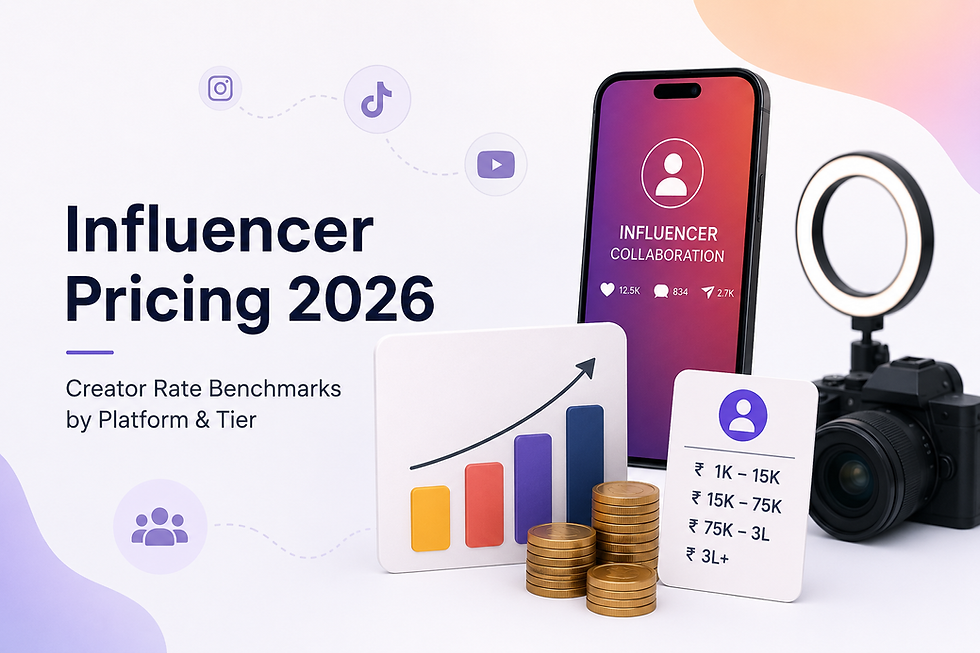
Creator pricing also changes based on the type of content requested. A short Story may cost less than a Reel or TikTok video, while a YouTube sponsorship can command a higher fee because of the planning, production, and editing involved.
This guide covers practical influencer pricing statistics, estimated creator rates by platform and tier, and simple formulas brands and creators can use to evaluate a fair rate.
Influencer Rate Card 2026: Estimated Pricing by Platform and Tier
Influencer pricing is the amount a creator charges a brand to create and publish sponsored content. A creator may quote a fee per post, per video, per campaign, or as part of a long-term partnership.
Creator pricing varies significantly across platforms and campaign types. Brands can compare additional industry estimates through Influencer Marketing Hub’s influencer rate benchmarks.
The following ranges are broad planning benchmarks for a single sponsored deliverable. They are not fixed rates and should be adjusted based on audience quality, niche, content requirements, and commercial rights.
Creator Tier | Audience Size | Instagram Sponsored Content | TikTok Video | YouTube Sponsorship |
Nano | 1K–10K | ₹1,000–₹15,000 | ₹1,500–₹20,000 | ₹5,000–₹30,000 |
Micro | 10K–100K | ₹15,000–₹75,000 | ₹10,000–₹1,00,000 | ₹25,000–₹2,00,000 |
Mid-tier | 100K–500K | ₹75,000–₹3,00,000 | ₹50,000–₹3,00,000 | ₹1,00,000–₹7,00,000 |
Macro | 500K–1M | ₹3,00,000–₹7,50,000+ | ₹3,00,000–₹8,00,000+ | ₹5,00,000–₹15,00,000+ |
Mega | 1M+ | ₹7,50,000+ | ₹8,00,000+ | ₹15,00,000+ |
These are estimated planning ranges rather than guaranteed market rates. Actual creator pricing may be higher or lower depending on the campaign.
These ranges are intended as planning estimates rather than fixed market rates. For additional platform and creator-tier comparisons, review Later’s influencer pricing benchmarks.
Creator Rate Benchmarks by Platform
The following standalone pricing statements are written so that readers and AI search systems can understand the benchmark without relying only on the table.
Nano Instagram creators with 1,000–10,000 followers may charge approximately ₹1,000–₹15,000 for sponsored content, depending on engagement and content requirements.
Micro Instagram creators with 10,000–100,000 followers may charge approximately ₹15,000–₹75,000 per sponsored collaboration.
Mid-tier Instagram creators with 100,000–500,000 followers may charge approximately ₹75,000–₹3,00,000 per sponsored campaign deliverable.
Macro Instagram creators with more than 500,000 followers may charge approximately ₹3,00,000–₹7,50,000 or more, particularly for premium niches or campaigns that include usage rights.
Micro YouTube creators may charge approximately ₹25,000–₹2,00,000 for a sponsored integration, while larger channels may charge ₹5,00,000 or more per campaign.
What Factors Affect Influencer Pricing?
Two creators with similar follower counts can charge very different rates. Brands should evaluate the full value of the collaboration rather than comparing prices based only on audience size.
1. Engagement Rate and Audience Quality
A smaller creator with an active, relevant audience may generate better results than a larger creator with low engagement.
Brands can use AI-powered influencer discovery to evaluate creators using audience quality, engagement patterns, content relevance, audience demographics, and campaign fit instead of relying only on follower count.
Look beyond follower count and review:
Average views and reach
Meaningful comments and audience interaction
Story views
Video watch time
Audience demographics
Audience location
Previous campaign performance
Signs of fake or inactive followers
2. Platform and Content Format
Different content formats require different levels of effort.
A static Instagram post may take less time to create than a Reel, TikTok video, or YouTube integration. Video content can involve research, scripting, filming, editing, revisions, and product integration.
3. Creator Niche
Creators in high-value or specialized categories may charge premium rates. Technology, finance, beauty, luxury, gaming, B2B, and professional niches can have higher pricing because their audiences may be more commercially valuable or harder to reach.
4. Content Usage Rights
A creator’s publishing fee does not automatically include permission for a brand to reuse the content in advertisements or other marketing channels.
Brands may need to pay separately for:
Paid social advertising
Website content
Email campaigns
Product pages
Digital advertisements
Long-term content licensing
5. Exclusivity
Exclusivity means the creator agrees not to promote competing brands for a defined period.
For example, a beauty creator may request an additional fee if they cannot collaborate with competing brands for three or six months.
What Is a Fair Influencer Rate?
A fair influencer rate should reflect both the expected campaign value and the work required from the creator.
CPM-Based Pricing Formula
Estimated influencer fee = Expected campaign impressions ÷ 1,000 × agreed CPM
Example: If a creator is expected to generate 50,000 impressions and the agreed CPM is ₹1,000:
50,000 ÷ 1,000 × ₹1,000 = ₹50,000
This approach can be useful when a campaign’s main objective is awareness or reach.
Deliverable-Based Pricing Formula
Creator fee = Content production fee + publishing value + usage rights + exclusivity fee + additional deliverables
Example:
Instagram Reel production and publishing: ₹40,000
Three Story frames: ₹10,000
Three-month paid usage rights: ₹15,000
Estimated campaign fee: ₹65,000
The deliverable-based model is often more practical because it accounts for creative effort and commercial usage—not only follower count.
How Brands Can Build an Influencer Marketing Budget
An influencer campaign budget should include more than creator fees.
Consider allocating funds for:
Creator payments
Product samples and shipping
Campaign management
Content review and approvals
Paid amplification
Content usage rights
Performance tracking
Contingency costs
Instead of allocating the full budget to one large creator, brands can test several nano or micro-influencers. This may provide access to multiple audience segments, more creative assets, and a broader set of performance data.
Common Influencer Pricing Mistakes
Avoid these common mistakes when negotiating creator rates:
Selecting creators based only on follower count
Expecting unlimited content usage without paying for rights
Comparing a YouTube integration directly with an Instagram Story
Ignoring audience relevance and geography
Requesting multiple revisions without defining revision limits
Treating gifted products as a replacement for fair payment
Failing to document deliverables and deadlines
A clear campaign agreement should define the content format, posting schedule, key messages, disclosure requirements, revision process, usage rights, exclusivity period, and payment terms.
Conclusion: How Much Do Influencers Charge?
Creator pricing is influenced by the continued growth of the influencer marketing industry, changing platform economics, and increasing demand for measurable campaign outcomes. For broader market data, explore Statista’s influencer marketing research.
So, how much do influencers charge in 2026? Creator fees can range from approximately ₹1,000 to ₹10,00,000+ per sponsored collaboration, depending on audience size, platform, engagement, niche, content format, and campaign requirements.
The best creator is not always the one with the largest following. Brands should evaluate audience relevance, engagement quality, content production effort, expected reach, usage rights, and campaign goals before agreeing on a rate.
For brands managing multiple creator partnerships, an influencer marketing platform can simplify creator discovery, campaign coordination, and performance measurement. Vidzers helps brands discover relevant creators, manage influencer collaborations, and make more informed campaign decisions.
Ready to find creators who fit your brand and campaign goals? Explore Vidzers and build more effective influencer collaborations.
Frequently Asked Questions
1. How much do influencers charge per post in 2026?
Influencers may charge from approximately ₹1,000 to ₹10,00,000+ per sponsored collaboration. The final rate depends on audience size, engagement, niche, platform, content format, and campaign requirements.
2. How much does a micro-influencer charge?
Micro-influencers with approximately 10,000–100,000 followers may charge around ₹15,000–₹75,000 for sponsored Instagram content. Rates may vary based on engagement, niche, deliverables, and usage rights.
3. How much do Instagram influencers charge?
Instagram influencer rates may range from approximately ₹1,000–₹15,000 for nano creators to ₹3,00,000–₹7,50,000+ for macro creators. Reels, Stories, usage rights, and exclusivity may increase the total campaign fee.
4. How are influencer rates calculated?
Influencer rates can be calculated using a CPM-based model or a deliverable-based model. A complete rate may include content production, publishing value, usage rights, exclusivity, and additional campaign requirements.
5. Should brands pay influencers based only on followers?
No. Follower count is only one pricing factor. Brands should also assess audience relevance, engagement quality, average views, content quality, audience demographics, and previous campaign performance.


Comments